Medicines · 2 min read · 22 Oct 2026
Why Swallowing a Peptide Usually Fails
Stomach acid, enzymes and a tight intestinal wall are three separate obstacles. A pill that beats all three is a real engineering feat.
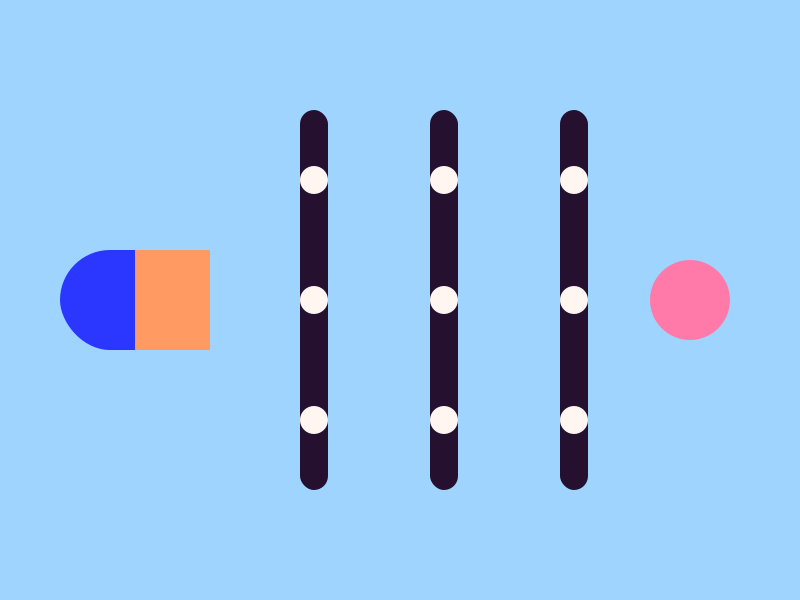
The obstacle course
A peptide taken by mouth meets three barriers in sequence:
- Stomach acid and pepsin start cutting the chains.
- Pancreatic enzymes (trypsin, chymotrypsin) keep cutting in the small intestine.
- The gut wall is a tight barrier. Large, charged, water-loving molecules barely cross it.
Very little of a swallowed peptide reaches the blood. Even the approved oral semaglutide tablet, built with an absorption enhancer, has an absolute bioavailability of only 0.4 to 1 percent.
Why injections dominate
Injection skips the whole route. That is why many peptide medicines are given under the skin, and why people ask whether a pill version can exist.
Tricks that have worked
- Absorption enhancers that help the peptide cross the lining for a short time, close to where the pill dissolves.
- Enteric coatings that survive acid and open further down.
- Cyclisation or D-residues that enzymes struggle to recognise.
- Tiny protective microenvironments around the tablet. The enhancer in oral semaglutide buffers the acid locally and so shields the peptide from enzymes in the stomach.
A caution for consumers
When a capsule label promises an intact peptide reaching the bloodstream, ask for human absorption data. Without it, the likeliest outcome is digestion into ordinary amino acids.
Sources
- DailyMed, Rybelsus (oral semaglutide) label, section 12.3 bioavailability: https://dailymed.nlm.nih.gov/dailymed/drugInfo.cfm?setid=27f15fac-7d98-4114-a2ec-92494a91da98
- PubMed, PMID 30429357 (Buckley et al., Sci Transl Med 2018, stomach absorption of oral semaglutide with SNAC): https://pubmed.ncbi.nlm.nih.gov/30429357/
- PubMed, PMID 31848464 (Drucker, Nat Rev Drug Discov 2020, advances in oral peptide therapeutics): https://pubmed.ncbi.nlm.nih.gov/31848464/
Along the table
 Next element · 34 TrWhat a Clinical Trial Phase Actually Tells YouPhase 1, 2, 3: the numbers are everywhere in news, and most readers have no idea what question each one answers.
 Previous element · 32 VnThe Long Road From Venom to PrescriptionSeveral approved peptide drugs began as molecules evolved to paralyse prey. Here is how a toxin becomes a tool.